Surface water drainage is one of the most important but least understood systems in Farnham homes. When it works, it protects your property from flooding, damp, erosion and foundation damage. When it fails, even a short burst of heavy rain can overwhelm gullies, saturate gardens and send water towards your home. This guide explains how surface water drainage works, the common issues we see across Farnham, and what homeowners can do to maintain a healthy, reliable system.
How surface water drainage works (simple explanation)
Surface water drains move rainwater away from roofs, driveways, patios and gardens. In Farnham, most homes use a combination of:
- Roof gutters and downpipes
- Surface gullies around driveways and paths
- Underground pipework linking gullies to soakaways or storm drains
- Soakaways, often used because of Farnham’s mixed clay/sandy soil
- Roadside drains, controlled by Surrey County Council
Each part needs to flow freely to prevent water pooling or backing up during storms. Even minor blockages can push water towards your home, especially in winter when rainfall is heavier and gutters carry fallen leaves.
Why Farnham homes get surface water issues
Farnham properties often sit on clay-dominant soil. Clay drains poorly, so rainwater builds up quickly unless your drainage system directs it away fast. Older properties are especially vulnerable because soakaways deteriorate with age and pipework may be undersized for modern weather patterns.
Common issues we find include:
- Silt and leaf buildup in gullies
- Collapsed clay pipes
- Soakaways filled with debris
- Root intrusion from surrounding trees
- Heavy winter rainfall overwhelming old systems
Each problem reduces flow, which increases local flooding risk.
Gutters and downpipes — the first defence
Most surface water problems start at roof level. Gutters in Farnham frequently fill with leaves, pine needles and moss. When this happens, water spills over the edge, lands near walls and saturates the surrounding soil. Over time, this can cause damp patches, foundation stress and mould inside the home.
Maintenance tips:
- Clean gutters twice yearly (spring and autumn).
- Check downpipes for slow discharge.
- Install leaf guards where trees overhang the property.
Surface gullies — essential for driveways and patios
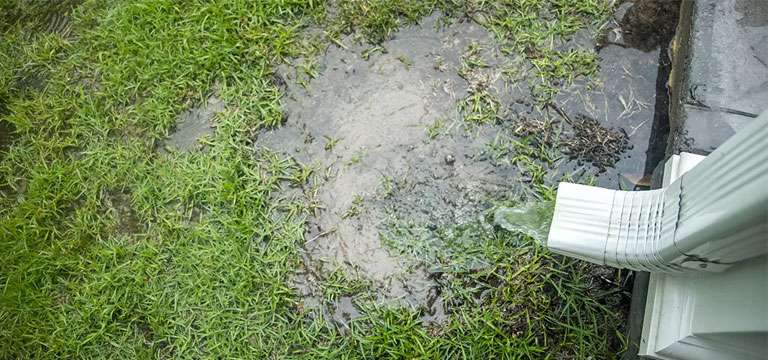
Gullies catch water at ground level and connect it to underground storm drains or soakaways. When blocked, surface water spreads across driveways, paths and play areas and moves towards the structure.
Signs of a blocked gully:
- Water standing longer than five minutes
- Gurgling or bubbling sounds
- Smell coming from the drain
- Overflow during light rainfall
Gully cleaning is one of the fastest ways to restore flow and prevent damage.
Soakaways — where the water actually goes
Many Farnham homes rely on soakaways instead of direct storm drains. These underground gravel-filled chambers allow water to slowly drain into surrounding soil.
However, they commonly fail because:
- Silt accumulates over time
- Tree roots penetrate the chamber
- The design is too small for modern rainfall
- Nearby building projects have changed drainage levels
A soakaway in poor condition will struggle to cope during heavy rainfall—causing water pooling in gardens or driveways.
Underground pipework — hidden but crucial
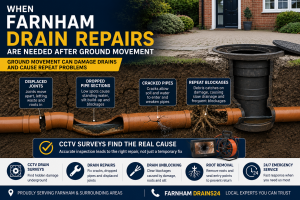
Even if gutters and gullies work well, the underground system may still fail. Clay pipes crack with age. UPVC can warp under soil movement. Joints shift. Tree roots target moisture and squeeze through weak spots. When this happens, blockages form and water cannot escape.
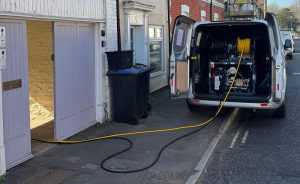
A CCTV survey is the best way to find these issues early and avoid expensive excavation.
✔ Links to use:
- Learn more about our CCTV inspections
Surface water and winter flooding in Farnham
Winters in Farnham are becoming wetter, with sudden bursts of rainfall. When a system is already partially blocked, a heavy downpour is enough to overwhelm it within minutes.
Higher-risk homes include:
- Properties on slopes
- Homes with clay-heavy garden soil
- Older properties with outdated soakaways
- Driveways that slope towards the house
- Homes with large roof areas and insufficient drainage
A winter drainage check can prevent expensive repairs later.
How to maintain surface water drainage year-round
Here are practical steps Farnham homeowners can take:
- Clean gutters twice a year
- Clear driveway and patio gullies every few months
- Check soakaway performance after heavy rain
- Avoid washing mud, sand or paint into outdoor drains
- Keep surrounding areas free from leaf buildup
- Install additional drainage channels if water travels towards your home
If problems persist, a CCTV survey provides clear answers.
Professional solutions we offer in Farnham
✔ Drain jetting
Flushes silt and debris from gullies and pipes.
✔ CCTV surveys
Identifies cracks, root intrusion and collapsed sections.
Link: CCTV Surveys
✔ Soakaway repair or replacement
Restores full drainage performance.
Link: Soakaways
✔ Drain repairs and relining
Fixes structural defects without excavation where possible.
Link: Drain Repairs
✔ Preventative maintenance
Keeps your system functioning throughout the year.
Conclusion — keep your Farnham home protected
Surface water drainage failures can cause costly problems if left unresolved. Regular maintenance and simple checks can prevent flooding, protect your home and keep your drainage system operating efficiently. When you need help, Farnham Drains24 provides fast, expert support backed by years of local experience.
Need help with surface water drainage in Farnham? Our engineers are available today for inspections, repairs and CCTV diagnostics. Call Farnham Drains24 for fast, expert support.
Surface Water Drainage FAQs
Why does surface water drainage sometimes fail in Farnham?
Farnham’s clay-rich soil drains slowly, so heavy rainfall can overwhelm old or partially blocked systems. When gullies, gutters, or underground pipes clog with silt or debris, water cannot escape and begins to pool around the property.
How do I know if my soakaway is failing?
If water pools in one area of your garden, drains slowly, or overflows during rain, your soakaway may be saturated or blocked. A CCTV inspection and soakaway test can confirm the issue quickly.
What causes standing water on driveways?
This usually happens when surface gullies become blocked with leaves, mud, or grit. It can also indicate collapsed underground pipework or a soakaway that no longer absorbs water.
Do I need a CCTV survey for surface water problems?
Yes, if the issue is recurring or severe. CCTV surveys reveal hidden structural problems, root intrusion, and collapsed sections that cannot be identified from the surface alone.
Can regular maintenance prevent flooding?
Absolutely. Cleaning gutters, clearing gullies, and checking soakaway performance significantly reduces the risk of winter flooding and long-term water damage to your home.