Building an extension, garage, or garden structure in Farnham involves more than planning permission and Homeowners in Farnham often focus on planning permission when preparing for an extension, garage, or garden room. However, drainage is just as important — and it’s one of the most common areas where projects run into unexpected problems.
In practice, drainage issues rarely appear on drawings, but they frequently surface once work begins. Understanding drainage regulations in Farnham early can prevent delays, enforcement action, and costly changes later in the build.
Why Drainage Rules Exist
Drainage systems must carry wastewater away from properties safely and consistently. When building work interferes with existing pipework, even unintentionally, it can affect neighbouring homes and the wider sewer network.
Building control teams enforce drainage rules to ensure new structures do not restrict access, weaken pipework, or increase flood risk. When compliance is missed, projects often stall at the sign-off stage.
Locating Drains Before Work Starts
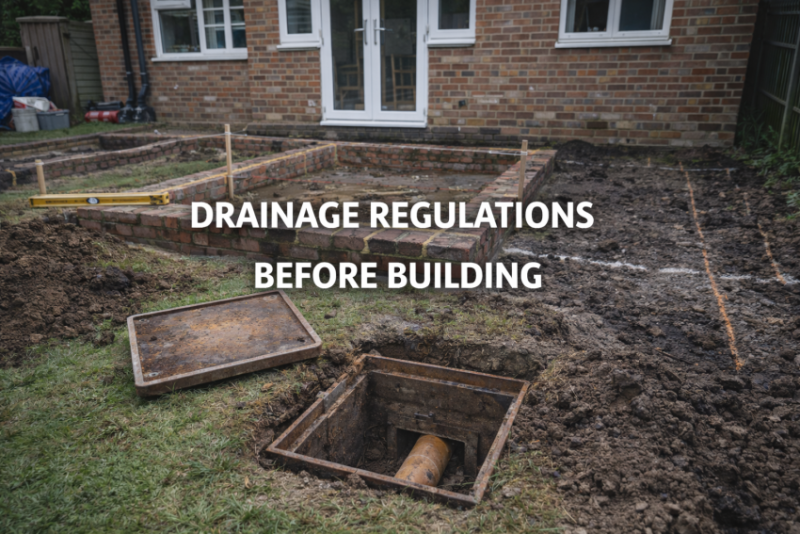
Many Farnham properties, particularly older homes, have drainage runs that are not immediately obvious. Pipes may cross gardens, sit beneath driveways, or connect to neighbouring properties before reaching the public sewer.
We often see problems arise when builders discover drains mid-excavation. At that point, work usually stops while responsibility and permissions are clarified.
Build Over Agreements in Real Terms
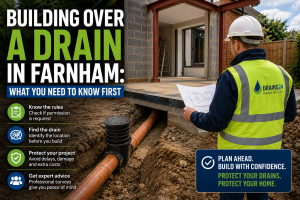
If an extension is planned close to, or directly above, a public sewer, homeowners usually need a Build Over Agreement from the local water company.
This process confirms that:
- The sewer remains structurally sound
- Future access for maintenance is protected
- The proposed foundations meet required standards
Without this approval, building control may refuse to certify completed work, even if construction appears finished.
Building Regulations Still Apply Without Planning Permission
Some projects fall under permitted development, but drainage rules still apply regardless. Building control officers assess pipe gradients, ventilation, inspection access, and connection methods during inspections.
Common problems we encounter include shallow gradients, sealed inspection chambers, and altered pipe routes that no longer meet current standards.
When Drain Surveys Make Sense
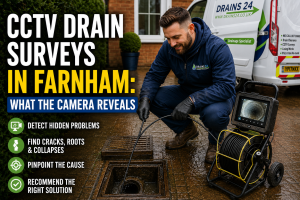
Drain surveys are not mandatory, but they are often the most practical way to reduce risk before building work begins. CCTV inspections confirm drain routes, ownership, and condition before foundations are poured or ground is disturbed.
This information often prevents redesigns, disputes, and delays later in the project.
What Happens When Regulations Are Ignored
When drainage compliance is missed, the consequences tend to escalate quickly. Homeowners may face enforcement notices, resale delays, neighbour disputes, or unexpected repair costs.
In Farnham, where mixed-age drainage systems are common, these risks increase significantly.
Planning Properly Saves More Than Time
Addressing drainage early allows projects to progress smoothly and avoids last-minute surprises. Identifying drains, obtaining approvals, and building to regulation protects both the property and its long-term value.
Drainage Regulations Frequently Asked Questions
Do I need approval to build over a drain in Farnham?
Yes. Public sewers usually require a Build Over Agreement before construction.
Are drainage checks part of planning permission?
Not always. Drainage compliance is normally assessed under building regulations.
What happens if approval isn’t obtained?
Building control may require changes or refuse final sign-off.
Are shared drains treated differently?
Yes. Shared or adopted drains involve additional responsibility and approvals.
Can drainage issues affect property sales?
Yes. Non-compliant drainage can delay or derail sales.