Surface water drainage is becoming a growing concern for Farnham homeowners. As rainfall increases and gardens are replaced with patios or driveways, surface water has fewer places to drain naturally.
Because of this, soakaway installation in Farnham homes now plays a key role in managing rainwater safely and meeting modern drainage requirements.
Why Soakaways Matter in Farnham
Farnham includes a mix of older properties, modern housing, and homes on the edge of rural land. In many areas, clay-heavy soil slows natural water absorption. As a result, surface water often builds up during prolonged rainfall.
Soakaways help manage this problem by controlling how rainwater disperses into the ground. When installed correctly, they reduce pressure on drains and lower the risk of surface flooding around the property.
What a Soakaway Actually Does
A soakaway collects surface water from roofs, patios, or driveways and allows it to gradually infiltrate the surrounding ground.
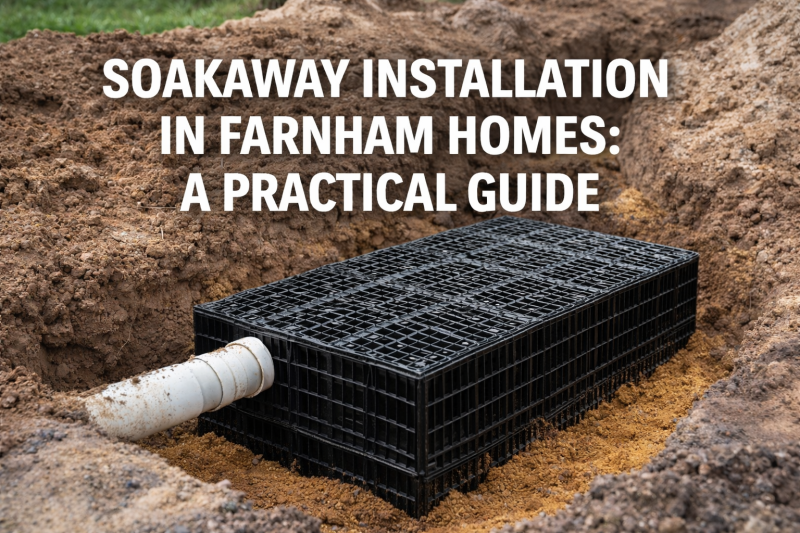
Modern soakaway systems differ significantly from older rubble-filled pits. Today’s installations typically use modular crates designed to:
- Hold large volumes of water
- Disperse flow evenly
- Prevent collapse or silting
- Allow maintenance access where required
Because of this, correct sizing and placement are essential.
When Soakaway Installation Is Required
In Farnham, homeowners often need soakaway installation when they build new properties, extend existing homes, or replace failed surface water systems. In addition, planning rules usually require soakaways when large paved areas increase runoff.
Because building regulations prioritise soakaways over direct sewer connections, homeowners must consider them early in the design stage. As a result, drainage plans that ignore soakaways often face rejection or costly redesign.erever ground conditions allow. Consequently, drainage plans are often rejected if soakaways are not considered early.
Where Soakaways Can Be Installed Safely
Soakaways must meet minimum distance requirements to avoid structural and environmental risks. In most cases, they should be positioned:
- Away from building foundations
- Clear of property boundaries
- Outside tree root zones
- Above the local water table
Incorrect placement often leads to water backing up toward buildings or neighbouring land. Therefore, careful planning is essential before excavation begins.
Drainage Regulations and Compliance
UK Building Regulations Part H sets out how surface water must be managed. In practice, building control expects homeowners and developers to consider soakaways before connecting rainwater directly to sewers.
To meet these requirements, installers carry out percolation testing, calculate system capacity, and confirm suitable installation depth. In Farnham, clay soil often limits absorption rates, so systems usually need careful sizing to work effectively.
This includes:
- Percolation testing to confirm ground suitability
- Correct system sizing based on roof area
- Suitable depth and backfill materials
In Farnham, clay soil frequently limits absorption rates. As a result, systems must often be larger or positioned deeper than expected.
Common Soakaway Problems Seen Locally
Poorly designed soakaways are a frequent cause of surface flooding. Common issues include:
- Systems installed without testing
- Insufficient capacity for roof runoff
- Incorrect depth in clay ground
- Blocked inlets caused by debris
These problems typically appear months or years after installation, making early design decisions critical.
When Surveys Help Before Installation
Drain mapping and CCTV surveys are often recommended before installing a soakaway. These checks confirm:
- Existing drainage routes
- Nearby shared or adopted drains
- Structural risks below ground
This information prevents accidental damage and supports compliant installation.
Planning Ahead Prevents Future Issues
Planning soakaway installation early saves time and prevents unnecessary costs later. When homeowners confirm drainage routes, soil conditions, and system capacity from the outset, installations perform better and last longer.
Ultimately, soakaways work best when they form part of a wider drainage plan rather than a last-minute solution.
Soakaway Installation in Farnham – FAQs
Do I need a soakaway in Farnham?
In many cases, yes. Building regulations often require soakaways for surface water where ground conditions permit.
Do soakaways work in clay soil?
They can, but systems must be correctly sized and tested. Clay soil drains slowly, so design adjustments are often necessary.
How far should a soakaway be from my house?
Soakaways should be positioned a safe distance from foundations to prevent structural damage. Exact distances depend on soil and system size.
Do soakaways need maintenance?
Yes. Inlets should be kept clear, and systems inspected periodically to ensure water disperses correctly.
Can an old soakaway be replaced?
Yes. Older systems often fail due to collapse or silting and can be upgraded to modern crate systems.