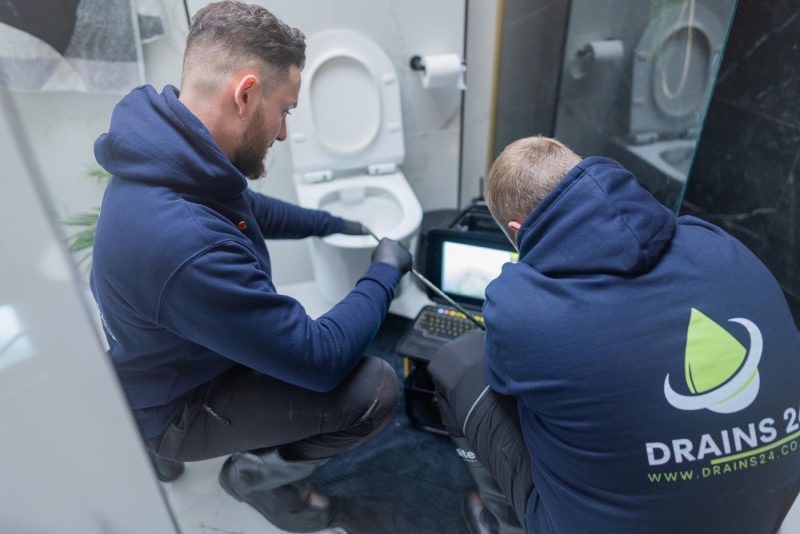
A Farnham drain unblocking callout should be clear, practical and focused on restoring flow safely. When a drain blocks, most customers want to know what will happen when the engineer arrives, how the blockage will be found, and whether the issue is likely to return.
Some blockages are simple. Others are a sign of root intrusion, damaged pipework, poor fall, silt build-up or a hidden defect inside the drain. The purpose of a proper visit is not only to clear the immediate blockage, but also to spot warning signs that may need further attention.
Farnham Drains24 helps homeowners, landlords and businesses deal with blocked drains, slow drainage, overflowing gullies and repeat drainage problems across Farnham and nearby areas.
Why a Farnham drain unblocking callout starts with checks
A good drain unblocking visit should start with basic checks before equipment is used. The engineer needs to understand where the blockage is showing, which fixtures are affected, and whether the problem appears to be internal, external or connected to a shared drainage run.
This may include checking toilets, sinks, gullies, inspection chambers and outside drains. The engineer may also ask when the problem started, whether it has happened before, and whether any recent work has taken place near the drainage system.
These first checks help avoid guesswork and make it easier to choose the right method for clearing the drain.
Checking inspection chambers and access points
Inspection chambers are often the first place to check during a blocked drain visit. They allow the engineer to see whether water is backing up, whether the chamber is full, and which direction the blockage may sit.
If one chamber is clear and another is full, that helps narrow down the problem area. If several chambers are affected, the blockage may sit further downstream.
Safe access matters. Covers should be lifted carefully, and the engineer should avoid disturbing unstable or damaged chambers. Where a chamber is damaged, buried or difficult to access, further investigation may be needed.
Finding the likely cause of the blockage
Once the affected section is identified, the next step is to understand the likely cause. Common causes include wipes, fat, oil, grease, food waste, leaves, silt, scale, roots or damaged pipework.
In some cases, the cause is obvious. For example, an outside drain may be blocked with leaves and silt, or a kitchen line may show signs of grease build-up. In other cases, the drain may clear but still show signs of a deeper fault.
That is why a Farnham drain unblocking callout should focus on both clearing and assessment.
Clearing the blocked drain
The clearing method depends on the location, severity and type of blockage. Some blockages can be moved using rods. Others need water jetting to break up debris and restore flow.
Drain rods can help with certain straightforward blockages, but they are not suitable for every fault. High-pressure water jetting can be more effective for grease, silt, debris and longer external runs, when used correctly by a trained operator.
The Water Jetting Association publishes codes of practice for water jetting activities, including safe use of high-pressure and ultra-high-pressure water jetting equipment. During a professional drainage visit, this matters because water jetting is powerful equipment and should be handled with proper care. The WJA codes of practice are a useful industry reference for safe jetting standards.
Testing the drain after clearing
After the blockage has been cleared, the drain should be tested. This may involve running water from the affected fixtures, checking flow through the inspection chamber, and making sure the water level drops normally.
This step is important because a drain can appear clear at first but still hold water if there is a low section, partial obstruction or damaged pipe.
If flow returns properly and no warning signs remain, the issue may have been a simple blockage. If water drains slowly or backs up again quickly, further checks may be needed.
When drain unblocking reveals a repair issue
Not every blocked drain needs repair. However, some blockages are caused by faults inside the pipework. These faults can catch waste and cause the same problem to return.
Possible repair-related signs include:
- The same drain blocks repeatedly.
- Roots appear inside the pipe.
- Water sits in the drain after clearing.
- Inspection chambers show signs of cracking or movement.
- Debris keeps catching in the same section.
- The engineer suspects a collapsed or displaced pipe.
Where damage is suspected, drain repairs may be needed after the blockage has been cleared and properly assessed.
When CCTV inspection may be recommended
A CCTV survey is not required after every blockage. If the drain clears cleanly and the cause is obvious, a survey may not be necessary.
However, CCTV inspection can be very useful when the blockage has happened before, the cause is unclear, roots are suspected, or the drain still does not run properly after clearing.
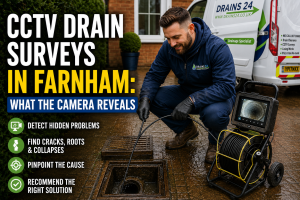
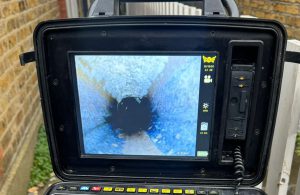
A CCTV drain survey can show cracks, displaced joints, root entry, scale, silt, poor gradients or partial collapse. It can also help locate the fault before repair work is planned.
What happens if roots are found?
Tree roots can enter drains through small cracks, open joints or weak seals. Once inside, they catch waste and create repeat blockages.
During a callout, the immediate aim is usually to restore flow. If roots are found, they may need cutting or clearing. However, the entry point may still remain.
For repeated root problems, root removal may need to be combined with CCTV inspection and repair advice. Otherwise, roots can return and cause the same drain to block again.
When the problem is urgent
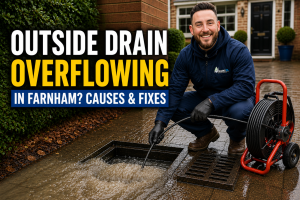
Some drain problems need faster attention than others. Overflowing foul drains, blocked toilets, sewage backing up, strong smells, water entering a property or drainage issues affecting a business should be treated seriously.
In urgent situations, emergency drainage services can help restore flow and reduce disruption.
It is also important to avoid using affected toilets, sinks or appliances until the drain has been checked, especially if water or waste is backing up.
What customers can do before the engineer arrives
Before a drain unblocking callout, customers can take a few simple steps to help the visit run smoothly.
- Stop using affected toilets, sinks or appliances.
- Keep children and pets away from overflowing drains.
- Clear access to inspection chambers where possible.
- Make a note of which fixtures are affected.
- Tell the engineer if the problem has happened before.
- Avoid pouring chemicals into the drain before the visit.
These steps help the engineer assess the problem more safely and efficiently.
A proper callout should give clear next steps
The best drain unblocking callouts do more than clear the immediate blockage. They should also explain what was found, whether the issue looks likely to return, and whether further inspection or repair work may be sensible.
Farnham Drains24 can help with blocked drains, drain unblocking, CCTV surveys, root removal, emergency drainage services and drain repairs.
If you need a Farnham drain unblocking callout, the goal is simple: restore flow, identify warning signs and give clear advice on what to do next.
FAQs
What happens during a Farnham drain unblocking callout?
The engineer checks the affected drains, inspection chambers and access points, identifies the likely blockage area, clears the obstruction, tests the flow and advises whether CCTV inspection or repairs are needed.
Do all blocked drains need high-pressure jetting?
No. Some blockages can be cleared with rods or basic methods. High-pressure jetting may be used for tougher external blockages, grease, silt or debris when suitable.
Will I need a CCTV survey after drain unblocking?
Not always. A CCTV survey may be recommended if the blockage returns, the cause is unclear, roots are suspected or the drain still runs slowly after clearing.
Can drain unblocking fix tree root problems?
Drain unblocking can restore flow and remove root mass in some cases, but it may not repair the entry point. Repeated root problems often need CCTV inspection and repair advice.
When should I call for emergency drain unblocking?
You should call urgently if sewage is backing up, foul drains are overflowing, toilets cannot be used, strong smells are present, or drainage problems are affecting a business or property.