Farnham drain repairs ground movement problems can start quietly underground. A drain pipe may shift, drop or lose support long before there is an obvious collapse at the surface. At first, the drain might still flow, but small changes inside the pipe can cause waste, silt and water to collect in the wrong place.
Over time, that movement can lead to repeat blockages, slow drainage, bad smells, standing water in inspection chambers or damage around the pipe run. The issue may look like a simple blockage, but the real cause can sit deeper in the drainage system.
Farnham Drains24 helps homeowners, landlords and businesses investigate drainage faults, identify damaged pipework and choose the right repair approach where drains have moved, dropped or become misaligned.
Why Farnham drain repairs ground movement issues need proper checking
Underground drains need correct alignment and fall. Wastewater should move through the pipe smoothly, without sitting in low sections or catching on damaged joints.
When the ground around a drain moves, the pipe can shift with it. This may create a step inside the pipe, a dipped section, a cracked joint or a section that no longer has enough fall.
When that happens, the drain may keep blocking in the same place. Clearing the blockage may restore flow for a short time, but the fault can remain unless the damaged section is found and repaired.
What causes ground movement around drains?
Ground movement can happen for several reasons. Some movement develops slowly over time, while other movement follows building work, heavy loading or water escaping from damaged pipework.
Common causes include:
- Ground settlement around older drainage runs.
- Poor pipe bedding or support below the drain.
- Water escaping from cracks and softening the surrounding ground.
- Tree roots putting pressure on pipework.
- Heavy vehicles crossing shallow or weakened drains.
- Previous excavation near the pipe run.
- Driveway, patio or extension work disturbing the ground.
- Ageing joints loosening or separating over time.
Once the pipe loses support, the problem can become worse. Water may collect, silt may settle, and the drain may block more often.
Signs that a drain may have moved underground
Ground movement does not always create an obvious surface warning. In many cases, the first signs appear as ordinary drainage problems.
Warning signs can include:
- The same drain blocking repeatedly.
- Slow drainage after clearing.
- Water sitting in inspection chambers.
- Gurgling sounds from toilets, sinks or plugholes.
- Bad smells returning after cleaning.
- Silt or soil appearing inside the drain.
- Outside gullies overflowing more than once.
- Ground dipping, cracking or sinking near a drain route.
- Drains struggling after heavy rain or heavy use.
These signs do not prove that the pipe has moved, but they do suggest that the drain needs more than a quick surface-level check.
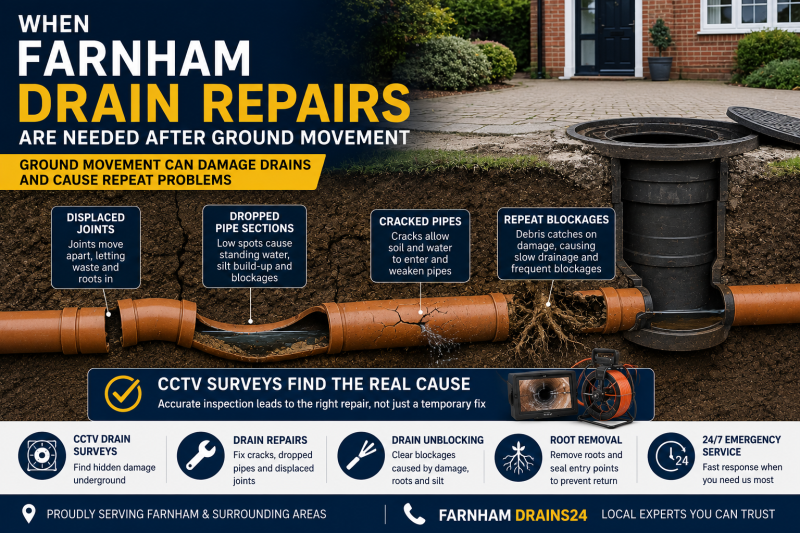
Displaced drain joints
A displaced joint happens when two pipe sections no longer line up properly. Even a small step inside the drain can catch paper, wipes, grease, silt and other debris.
The drain may clear after rods or jetting, but waste can start collecting at the same point again. That is why displaced joints often cause repeat blockages.
A displaced joint can also let roots enter the drain. Once roots get inside, they catch more waste and make the restriction worse.
Dropped pipe sections and standing water
A dropped pipe section can create a low point inside the drain. Instead of flowing away cleanly, water sits in the dipped area.
Standing water allows silt, grease and small debris to settle. Over time, that material builds up and reduces the space inside the pipe.
If water still sits in the drain after unblocking, the pipe may have poor fall, a dropped section or another hidden fault that needs inspection.
Cracked pipes caused by movement
Ground movement can put pressure on older or weakened pipes. Clay, pitch fibre and ageing pipe sections can crack when support changes or when the pipe shifts out of position.
A crack may allow water to escape into the surrounding ground. It may also let soil, grit and groundwater enter the pipe.
Once soil starts entering the drain, blockages can return quickly. Silt may keep appearing in the same section, even after the drain has been cleared.
When a blockage is only the symptom
Not every blocked drain needs repair. Some blockages come from grease, wipes, leaves, food waste or silt. Once cleared, the drain may work normally again.
However, repeat blockages are different. If the same drain blocks again, the blockage may only be the symptom of a damaged pipe, poor fall, displaced joint or ground movement below the surface.
A drain unblocking visit can restore flow, but further investigation may be needed if the same problem keeps returning.
How CCTV inspection confirms movement-related drain faults
A CCTV survey allows the inside of the drain to be checked without digging first. The camera can show whether the pipe has moved, cracked, dropped or separated at a joint.
A camera inspection of the drain can also show standing water, root entry, silt build-up, poor gradients, partial collapse and damaged pipe sections.
This helps avoid guesswork. It also helps locate the problem before any repair work is planned.
When roots and ground movement appear together
Roots often enter drains through small gaps, cracks or loose joints. Ground movement can make those weak points worse by opening joints or putting pressure on the pipe.
Once roots enter, they act like a net inside the drain. Waste and silt collect around the root mass, and the pipe becomes restricted.
Where roots are found, root removal may need to be followed by repair advice. Otherwise, the roots may return through the same opening.
Repair options for ground movement damage
The right repair depends on the fault, pipe condition, depth, access and how badly the pipe has moved.
Possible repair options include:
- Patch repair for a local crack or joint defect.
- CIPP lining where the pipe shape still allows it.
- Excavation where the pipe has dropped, collapsed or separated badly.
- Replacement of a damaged pipe section.
- Root cutting followed by sealing or repair of the entry point.
- Chamber repair where movement affects the inspection chamber.
Not every moved drain needs excavation. However, a badly dropped, collapsed or separated section may need direct repair to restore the pipe properly.
Why driveway and patio areas need careful attention
Drain runs often pass below driveways, patios, paths and garden areas. If the ground below these surfaces moves, drainage faults may stay hidden until blockages or damp areas appear.
Heavy surface loading can also affect shallow or weakened pipes. This is more likely where older drains run under driveways or where previous work has disturbed the ground.
If paving starts sinking, cracking or staying wet near a drain route, it is worth checking whether a pipe fault is contributing to the problem.
Ground movement after building work
Extensions, resurfacing, garden works and excavation can all disturb the ground around drainage runs. Sometimes the issue appears soon after the work. In other cases, the drain starts failing months later.
Drainage routes should be understood before work starts near underground pipework. If access chambers are covered or pipe routes are unclear, future repairs can become harder and more disruptive.
Where drainage work relates to pipe layout, access or building alterations, the UK Government’s Approved Document H for drainage and waste disposal gives useful background on drainage access, pipework and waste disposal standards in England.
When the problem becomes urgent
Ground movement does not always create an immediate emergency. However, urgent help may be needed if foul water backs up, toilets cannot be used, several drains fail together or water enters the property.
Drainage issues can also become more urgent for landlords, shops, hospitality premises, care settings and multi-occupancy buildings where several people rely on the same drainage system.
For urgent drainage problems, emergency drainage services can help restore flow and reduce disruption before further investigation is arranged.
How to reduce repeat problems after repair
Once a moved or damaged drain has been repaired, good habits can help reduce avoidable future blockages.
- Keep fat, oil and grease out of sinks.
- Only flush toilet paper.
- Keep outside gullies clear of leaves, silt and garden debris.
- Act quickly if the same drain blocks again.
- Watch for sinking ground or damp patches near drain runs.
- Avoid heavy loading over vulnerable shallow pipework where possible.
- Use CCTV inspection before major building or landscaping work near drains.
These steps cannot stop every underground fault, but they help protect the drainage system and make warning signs easier to spot.
Get the cause checked, not just the blockage cleared
Ground movement can turn a simple drainage problem into a recurring one. If a drain keeps blocking, holds water or shows signs of movement nearby, the pipe may need closer investigation.
Farnham Drains24 can help with drain repairs, CCTV surveys, drain unblocking, root removal and emergency drainage services across Farnham.
If the same drainage issue keeps returning, it is worth checking whether ground movement or hidden pipe damage is the real cause.
FAQs
How do I know if ground movement has affected my Farnham drains?
Warning signs can include repeat blockages, slow drainage after clearing, standing water in inspection chambers, bad smells, gurgling sounds, silt in the drain or ground dipping near the pipe route.
Can ground movement cause repeated blocked drains?
Yes. Ground movement can cause displaced joints, dropped pipe sections and poor gradients. These faults can catch waste and lead to repeat blockages.
Do I need a CCTV survey for suspected drain movement?
A CCTV survey is usually the best way to confirm movement-related faults because it can show displaced joints, dropped sections, cracks, standing water and root entry.
Can a moved drain pipe be repaired without digging?
Sometimes. Patch repair or lining may suit certain localised faults, but excavation may be needed if the pipe has dropped badly, collapsed or separated.
When are Farnham drain repairs urgent?
Drain repairs become urgent when foul water backs up, toilets cannot be used, water enters the property, several drains fail together or the issue affects a business or rental property.