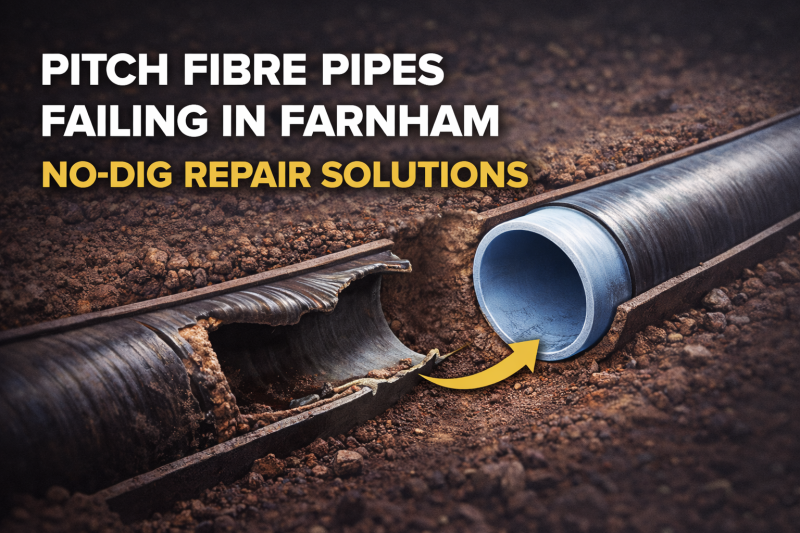
Many properties across Farnham still rely on pitch fibre drainage pipes installed between the 1950s and 1970s. At the time, they offered a lightweight and cost-effective solution. However, decades later, these systems now represent one of the most common causes of structural drain failure.
Homeowners often do not realise their property has pitch fibre pipes until problems begin. Blocked drains, recurring smells, slow flow, or even garden sinkage can all point to this ageing material reaching the end of its service life.
Why Pitch Fibre Pipes Were Used
Originally, pitch fibre pipes were produced by compressing wood cellulose fibres with coal tar pitch. This created a lightweight pipe that was easier to install than clay or concrete alternatives. As a result, they became popular in post-war housing developments across Farnham.
However, the material was never designed to last for multiple generations. Over time, water, pressure, and ground movement gradually weaken the pipe structure.
Why They Are Failing Now
Several factors contribute to the widespread failure of pitch fibre drains today.
1. Delamination
Water infiltration causes the inner layers of the pipe to separate. Consequently, the pipe walls begin to blister and collapse inward.
2. Deformation Under Load
Ground pressure from soil movement, vehicles, or extensions compresses the weakened pipe. This leads to flattening or oval distortion, which reduces flow capacity.
3. Root Intrusion
Tree roots naturally seek moisture. Once the pipe softens, roots can easily penetrate joints and cracks. Over time, this creates major blockages and structural damage.
4. Surface Erosion
As internal layers break down, fragments collect downstream. Therefore, recurring blockages often occur even after clearance.
Warning Signs for Farnham Homeowners
Because these failures develop gradually, early symptoms are often overlooked.
- Repeated blockages in the same location
- Gurgling sounds after water use
- Foul outdoor smells
- Damp patches in lawns
- Sinks draining slower than usual
If several of these signs appear, a professional survey becomes essential.
How Professionals Diagnose the Problem
The most reliable method is a CCTV drain survey. Engineers insert a camera into the pipe system, allowing them to assess structural condition in real time. This reveals deformation, blistering, root ingress, or collapse.
Surveys also help determine whether localised repair or full lining is required.
Modern Repair Options
Fortunately, excavation is rarely necessary.
CIPP Drain Lining
Cured-In-Place Pipe (CIPP) lining creates a structural pipe within the existing one. A resin-soaked liner is inserted, then cured in place. This reinforces the pipe without digging up gardens or driveways.
Patch Repairs
For isolated damage, short liner patches can restore integrity while minimising cost.
Re-Rounding
Specialist tools reshape deformed pitch fibre pipes before lining, ensuring long-term stability.
Why Early Action Saves Money
Delaying repair allows deformation to worsen. Eventually, collapse can occur, which may require full excavation. Early intervention, by contrast, prevents property damage and reduces repair complexity.
Additionally, proactive repair helps avoid insurance disputes and emergency callout costs.
When to Book an Inspection
If your home dates from the mid-20th century, it is wise to arrange a survey before problems escalate. This is especially important before renovations, extensions, or property sales.
FAQs
What are pitch fibre pipes?
Pitch fibre pipes are bitumen-impregnated cellulose pipes widely installed in UK properties between the 1950s and 1970s. Over time they soften, deform, and collapse under ground pressure and modern water usage.
Why are pitch fibre pipes now failing in Farnham?
Age, soil movement, root intrusion, and increased wastewater flow are causing pitch fibre pipes in Farnham to blister, delaminate, and collapse, leading to frequent blockages and structural failures.
What are the signs of pitch fibre pipe failure?
Common signs include repeated blockages, slow drainage, foul smells, sinkholes in gardens, and CCTV surveys showing pipe deformation or blistering.
Can pitch fibre pipes be repaired without digging?
Yes. Modern no-dig CIPP drain lining reinforces the existing pipe with a resin liner, restoring structural integrity and flow without excavation.
How long does CIPP lining last?
Properly installed CIPP liners typically last 50 years or more, providing a durable solution that resists root intrusion and ground movement.
Should I replace or reline pitch fibre pipes?
Relining is usually preferred for cost, speed, and minimal disruption. However, full replacement may be needed if pipes are severely collapsed or misaligned.