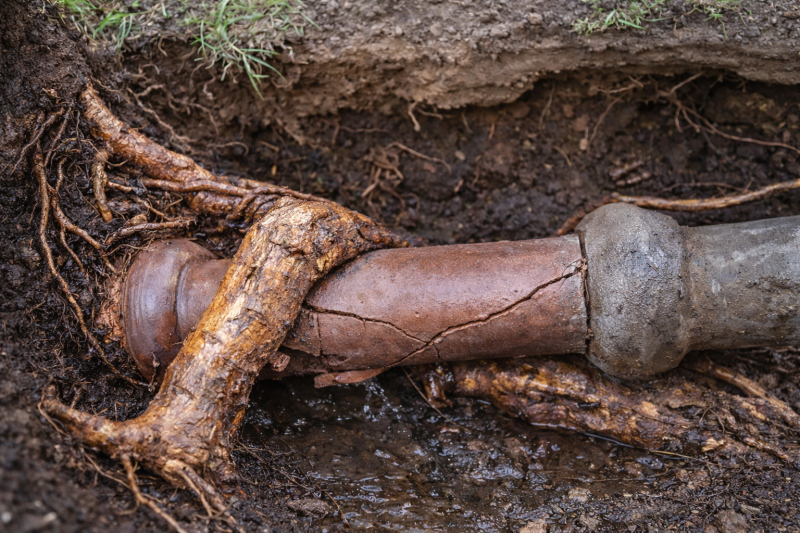
Tree root intrusion is one of the most common causes of persistent drain problems in Wrecclesham and surrounding parts of Farnham. Mature gardens, established trees, and older drainage systems often create the perfect conditions for roots to enter underground pipework.
Although the issue usually starts small, it rarely stays that way. Over time, root growth inside drains restricts flow, traps debris, and places pressure on pipe joints. As a result, homeowners often experience repeated blockages that standard clearing methods fail to resolve.
Why Tree Root Intrusion Is Common in Wrecclesham
Many properties in Wrecclesham were built decades ago using clay or pitch fibre drainage pipes. While these materials were standard at the time, they are far more vulnerable to root penetration than modern pipework.
Tree roots naturally seek moisture. Even a tiny crack or displaced joint can release enough condensation to attract growth. Once roots enter the system, they continue to expand, especially during warmer months.
Because this damage happens underground, early warning signs often go unnoticed.
Early Signs of Root-Related Drain Problems
Although roots grow out of sight, the symptoms usually appear inside the home or garden. Common indicators include:
- Drains that block repeatedly despite being cleared
- Slow drainage affecting multiple fixtures
- Gurgling sounds from toilets or sinks
- Foul smells around inspection chambers
- Localised flooding during heavy rainfall
When these issues occur together, root intrusion is often the underlying cause.
Why Cutting Roots Alone Is Not a Long-Term Fix
In some cases, roots are simply cut back during an unblocking visit. While this restores flow temporarily, it does not address the damaged pipework that allowed the roots to enter.
Because the access point remains open, roots typically return. Consequently, blockages reappear and worsen over time.
A long-term solution requires identifying where the roots entered and repairing or lining the affected section of pipe.
How Root Intrusion Is Diagnosed
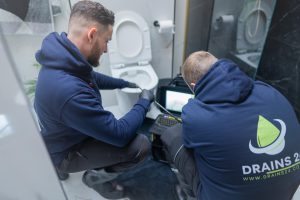
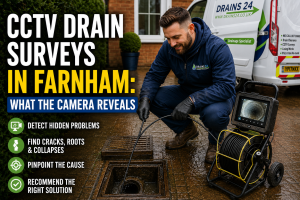
A CCTV drain survey is the most reliable way to confirm root intrusion. During the inspection, a camera is passed through the drainage system to locate:
- Root masses inside the pipe
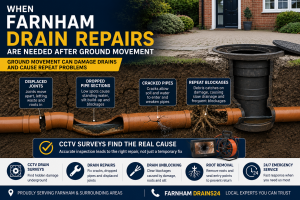
- Cracks, fractures, or displaced joints
- Collapsed or deformed sections
- The exact position of the damage
This evidence allows repairs to be targeted accurately, which reduces disruption and avoids unnecessary excavation.
Professional Root Removal and Repair Options
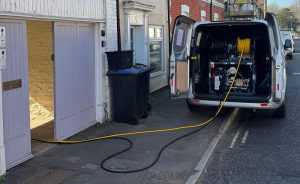
Once identified, root intrusion can be resolved using several professional methods, depending on severity:
- Mechanical root cutting to clear obstructions
- High-pressure jetting to remove residual debris
- Drain lining to seal cracks and joints internally
- Localised excavation where structural damage exists
Choosing the correct approach prevents repeat issues and protects the surrounding drainage network.
Why Early Action Matters in Farnham Properties
Root intrusion rarely improves on its own. Left untreated, expanding roots can fracture pipes, cause collapses, and lead to water escaping into surrounding ground.
For Wrecclesham homeowners, early diagnosis often means lower repair costs, less disruption, and longer pipe lifespan.
Tree Root Intrusion in Wrecclesham – FAQs
What causes tree roots to enter drains?
Tree roots are attracted to moisture. Small cracks, joints, or displaced pipes allow condensation to escape, drawing roots inside.
Are older drains more vulnerable to root intrusion?
Yes. Clay and pitch fibre pipes are more susceptible to cracking and joint movement, making them easier for roots to penetrate.
Can root intrusion cause pipe collapse?
Yes. As roots grow, they apply pressure that can fracture or collapse weakened pipes.
Is a CCTV drain survey necessary?
Yes. CCTV surveys confirm the location and severity of root intrusion and help plan effective repairs.
Will root removal stop future problems?
Root removal combined with pipe repair or lining prevents regrowth and offers a long-term solution.